

The Short Version
Before you choose a contractor for a commercial electrical build-out, get clear answers on five things: what's actually included in the scope, who's pulling the permits, what the estimate does and doesn't cover, how long the work will take, and whether the person doing the work is a licensed electrician. If a contractor can't answer those plainly, that's worth noticing before you sign anything.
MacCloud Electric handles commercial electrical build-outs and commercial electrical contracting work in the Palm Beach area, and most of the questions below are the same ones we walk through with business owners before a project starts.
What Counts as a Commercial Electrical Build-Out
A commercial electrical build-out is the electrical work that goes into fitting out a space for a specific business use — running new circuits, installing panels, wiring for equipment, lighting, outlets, and sometimes data or low-voltage cabling. It's different from a small repair or a single fixture swap. It's a full scope of work tied to a space being built or renovated for occupancy.
Because the scope varies so much by business type — a restaurant kitchen needs different power than a retail fitting room or an office floor — the first question to ask isn't 'what does this cost,' it's 'what exactly does this space need.'
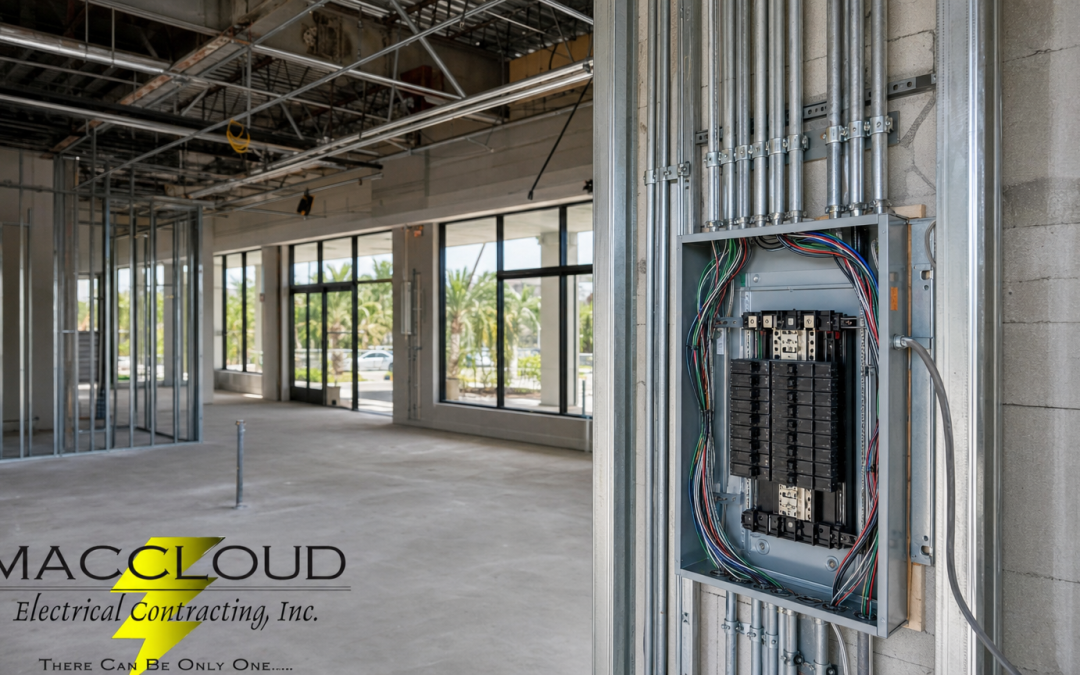
It also helps to understand that a build-out usually happens in two stages: rough-in and finish. Rough-in is the wiring that goes in before walls are closed up — conduit runs, panel placement, circuits run to where outlets and fixtures will eventually sit. Finish work is everything installed after drywall and ceiling work is done — devices, fixtures, switches, and final connections. Some quotes bundle both stages into one number; others separate them. Knowing which one you're looking at matters, because a quote for rough-in only can look much smaller than a quote for the full job, even if both contractors are pricing the same scope correctly.
Ask About Scope Before You Ask About Price
Get the scope in writing before you compare numbers. Two quotes that look close on price can represent very different amounts of actual work if one includes panel upgrades or low-voltage runs and the other doesn't.
Ask specifically: Does this include the panel and service upgrade if one is needed? Does it include permit fees, or are those billed separately? Are fixtures and equipment hookups part of this number, or just the rough wiring? A contractor who walks the space and gives you a scope tied to what you actually need is giving you something you can compare. A number with no scope attached isn't.
A Simple Example: Why Two Quotes Can Look So Different
Say you get two quotes for the same retail space. Quote A covers rough-in wiring, a new subpanel, and basic lighting circuits. Quote B covers all of that plus the panel's main service upgrade, outlet and switch devices, final fixture hookups, and the permit application itself. On paper, Quote A might look like the better deal — until you realize it leaves out work you'll still need done before you can open.
This is the trap that catches a lot of business owners comparing quotes on price alone. The fix is simple: ask each contractor to list exactly what's included, line by line, and compare those lists side by side before you compare the dollar figures. If one quote is missing something the other includes, ask why — sometimes it's a legitimate difference in approach, and sometimes it's a number built to look lower on paper.
Questions About Licensing, Permits, and Insurance
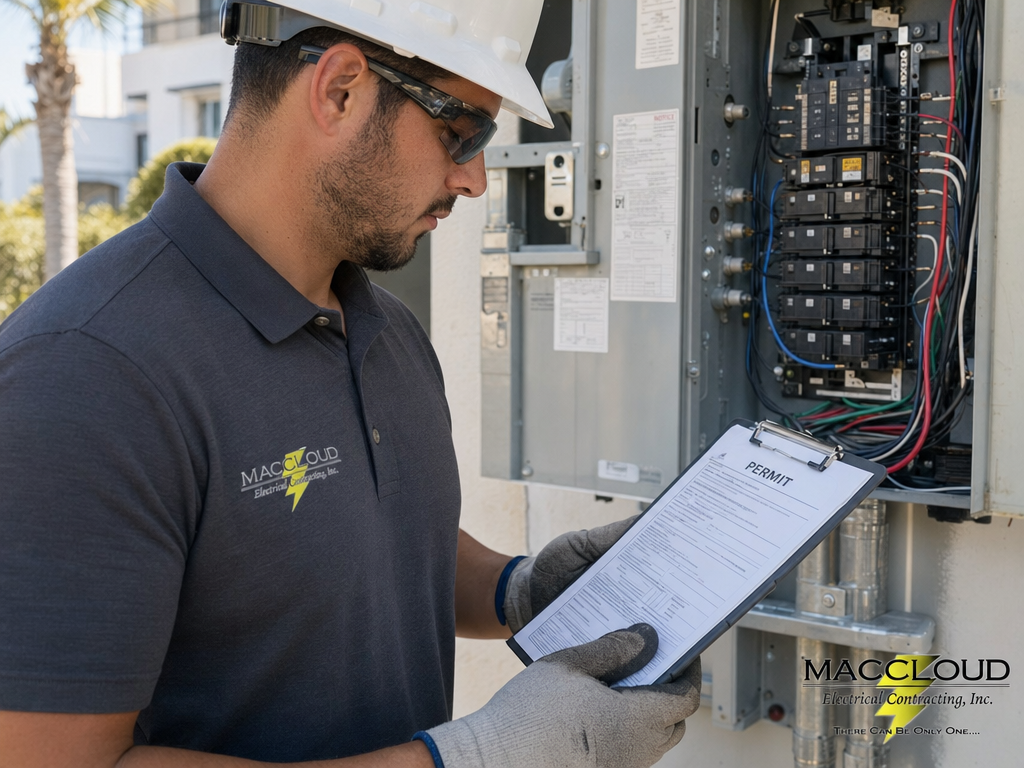
Before work starts, ask what qualifications and permits the specific project requires. Confirm who will arrange any required permit, inspection, and documentation, and include those responsibilities in the written scope. Ask for the contractor's qualification and insurance documentation so you can check it before signing.
Questions About Cost and Estimates
Commercial electrical costs are usually quoted either as a total project number or as a cost per square foot, and the right way to ask depends on how far along the project is. If you have full plans, ask for a line-item estimate. If you're still in early planning, a per-square-foot range is more useful for budgeting.
MacCloud Electric has written up how we think about commercial electrical build-out costs and how to estimate cost per square foot in 2026, which are both worth a read if you're still at the budgeting stage and want to understand what drives the number up or down before you get quotes.
Questions About Timeline and Disruption
Ask how long the electrical portion will take, and whether it depends on other trades finishing first — framing, drywall, or HVAC rough-in often has to happen in a certain order with electrical. Ask what happens if an inspection fails or a change order comes up midway through. A contractor who gives you a realistic range and explains what could move it is more useful than one who gives you a single confident date with no caveats.
Also ask how the electrical schedule fits around the other trades on the job. If the HVAC contractor is late, or drywall goes up before rough-in is signed off, your electrical timeline can slip even if the electrician did everything right and on time. A contractor who asks about your general contractor's schedule — rather than just quoting a start date in isolation — is thinking about the whole project, not just their piece of it.
What Happens If the Scope Changes Mid-Project?
Scope changes are common in commercial build-outs. A kitchen layout shifts, a piece of equipment gets swapped for one with different power needs, or an inspector flags something that wasn't in the original plan. Ask upfront how change orders are handled: does the contractor stop and give you a written estimate for the added work before proceeding, or does it just show up on the final invoice?
Ask, too, whether a change to one part of the scope — say, adding a dedicated circuit for new equipment — affects the permit or inspection timeline for the rest of the job. A contractor who treats change orders as a normal, documented part of the process is easier to work with than one who treats every change as a surprise.
Who Is Qualified to Perform the Work?
Choose the person doing the work based on the requirements of your specific project. Ask the local building department what applies to the proposed scope, then check the contractor's documentation before hiring. Our handyman vs. electrician guide provides questions to help compare your options.
When to Call MacCloud Electric
If you're in the Palm Beach area and you're at the point of comparing scope and cost for a commercial electrical build-out, that's the right time to call — before you've locked in a layout or signed a lease assuming the electrical will just work out. We handle commercial electrical build-outs and broader commercial electrical contracting services, and we can walk the space with you and talk through scope before you're committed to a number.
Questions and answers
How much does a commercial electrical build-out cost?
It depends heavily on the size of the space, what's already in place, and what the business needs — a panel upgrade or new service adds significantly more than wiring into an existing system. Our page on commercial electrical build-out costs breaks down the main cost drivers in more detail.
Who is qualified to perform a commercial electrical build-out?
Ask the local building department what qualifications and permits the proposed scope requires, then confirm that the contractor's documentation matches those requirements.
What should I ask for before comparing quotes from different contractors?
Get the scope of work in writing, confirm whether permit fees and inspections are included, and ask who will arrange them. Compare quotes for the same scope — including whether each one covers rough-in only or rough-in and finish work together.
What happens if the project scope changes after work has started?
Ask upfront how the contractor handles change orders — whether they provide a written estimate for added work before proceeding, and whether a change affects the permit or inspection timeline for the rest of the job.
If you're planning a commercial electrical build-out in the Palm Beach area, contact MacCloud Electric to walk through your space and scope before you lock in a budget.