

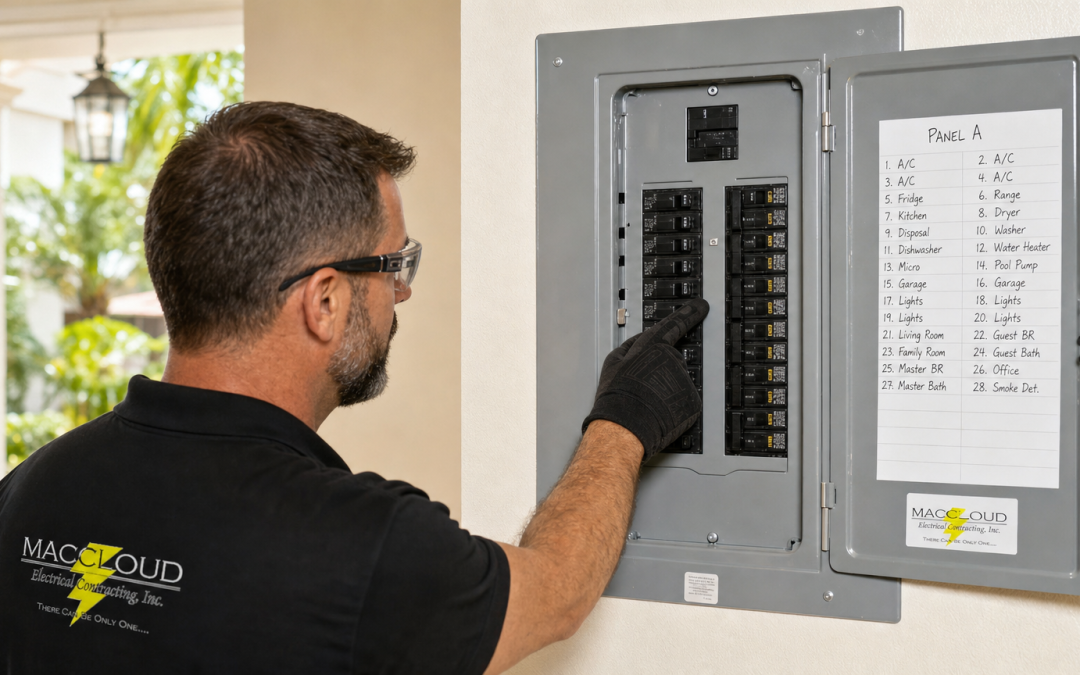
What Matters Most When You're Choosing a Panel
Three things decide which panel is right for your house: how much electrical load you're actually asking it to carry, whether the one you have now is safe, and what a replacement or upgrade is going to cost. Get clear on those three first, and the rest of the decision — amperage, breaker type, where it gets mounted — tends to sort itself out with the electrician who installs it.
Most people start asking this question for one of three reasons: a panel that trips breakers regularly, an inspection that turned up a problem, or a renovation that's adding more electrical load than the house was originally built for. If that's you, the questions below are the ones worth asking before you call anyone out.
How Much Power Do You Actually Need?
Panels are rated by amperage — the amount of electrical current they can safely distribute to the rest of the house. Older homes were often built with 60 or 100-amp service, which was plenty for a house with fewer appliances and no air conditioning running most of the year. Add central air, an electric range, a pool pump, a hot tub, or an EV charger, and that same panel can end up working harder than it was ever designed for.
200-amp service has become common in homes adding modern conveniences, but the right number for your house depends on what's actually running off the panel now and what you're planning to add in the next few years. This is worth working out early, because sizing a panel for only what you need today can mean paying to upsize it again later if you add a pool or a charger down the road.
Is Your Current Panel Actually a Problem, or Just Old?
Not every old panel needs to go. Some just need a breaker replaced or a loose connection tightened. The ones worth paying attention to are the ones with actual code violations: double-tapped breakers, missing grounding, a panel undersized for the circuits it's feeding, or wiring that doesn't match what the panel was built to handle. We've written more about what inspectors typically flag in a closer look at panel code violations, if you want to see what that actually looks like before someone comes out.
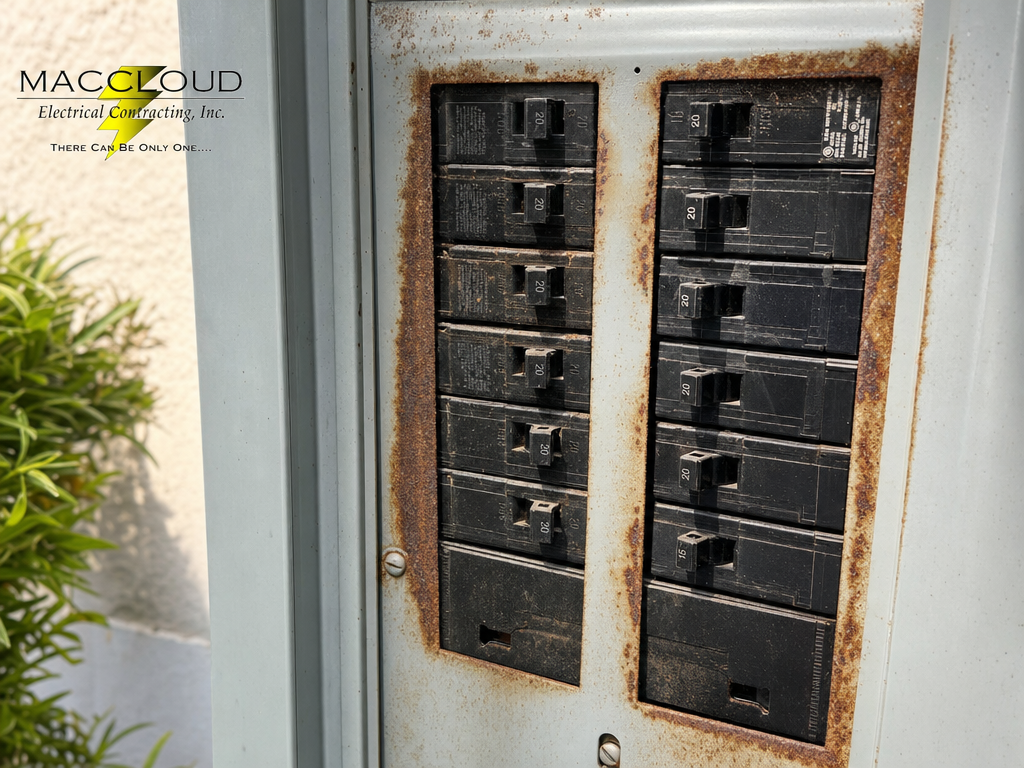
A panel that trips often, feels warm to the touch, smells like something's burning, or shows visible rust or corrosion isn't a wait-and-see situation. Those are reasons to get it looked at regardless of how old it is.
What Drives the Cost of a New Panel?
Panel replacement cost depends on the amperage you're moving to, whether the wiring needs updating to match it, how accessible the current panel is, and whether anything unexpected turns up once the cover comes off. A lot of the cost swing in this kind of project comes from what's discovered mid-job rather than what was quoted at the start. We've put together a full breakdown of what goes into that number in our Palm Beach panel upgrade cost guide, which is worth reading before you collect quotes so you know what to ask about the number someone hands you.
Repair, Replace, or Upgrade — Which Does Your Panel Need?
A repair makes sense when the panel itself is sound and the problem is isolated — a bad breaker, a loose lug, a tripped GFCI. A straight replacement makes sense when the panel is outdated, undersized, or has multiple violations that add up to more labor than a new panel would cost. An upgrade — moving to higher amperage — makes sense when you're adding something the current panel wasn't built to carry. If you're remodeling, it's worth reading about how bathroom electrical upgrades often tie back into panel capacity, since bathroom additions draw more power than people usually expect.
Timing the Work Around Palm Beach's Season
In Palm Beach County, a lot of homeowners try to get electrical work done before the season starts, when the house isn't full of guests and schedules are easier to coordinate. If a panel replacement is on your list along with other electrical projects, it's worth planning the timing together rather than tackling them one at a time. We cover that in our rundown of electrical projects worth starting before season.
Questions to Ask the Electrician Before You Hire Them
Before you commit to anyone, ask: What amperage are you recommending, and why that number for my house specifically? Will this require updating any of my existing wiring, or just the panel itself? Is a permit required, and who's responsible for pulling it? What happens if you find something unexpected once the old panel is opened up?
It's also fair to ask to see real examples of panel work completed. We've got a couple written up, including a completed panel replacement, if you want to see what the process actually looks like from start to finish.
Getting a Straight Answer on What Your Panel Needs
If you're not sure yet whether your situation calls for a repair, a straight replacement, or a full upgrade, that's a normal place to be before anyone's actually inspected the panel. The clearest next step is to have someone look at what you've got and tell you honestly what it needs. Call MacCloud Electric and we'll walk through it with you.
Questions and answers
How do I know if my panel needs to be replaced or just repaired?
If the problem is isolated — one bad breaker, a loose connection, a single tripped circuit — a repair usually solves it. If the panel itself is outdated, undersized for your home's load, or has multiple code violations, replacement usually ends up making more sense than repairing it piece by piece. An inspection is the only way to know for certain which situation you're in.
Do I need a permit to replace an electrical panel?
Permit requirements depend on the job and your local building department. Ask your electrician who will arrange any required permit and inspection, and have that responsibility included in the written scope.
What size panel do most homes need?
There's no single answer — it depends on what's running off the panel now and what you're planning to add. A home with central air, an electric range, and a pool pump needs more capacity than one without those loads. The right size comes from looking at your actual electrical demand, not a one-size answer.
Call MacCloud Electric to have your panel inspected and get a straight answer on whether it needs a repair, a replacement, or an upgrade.