

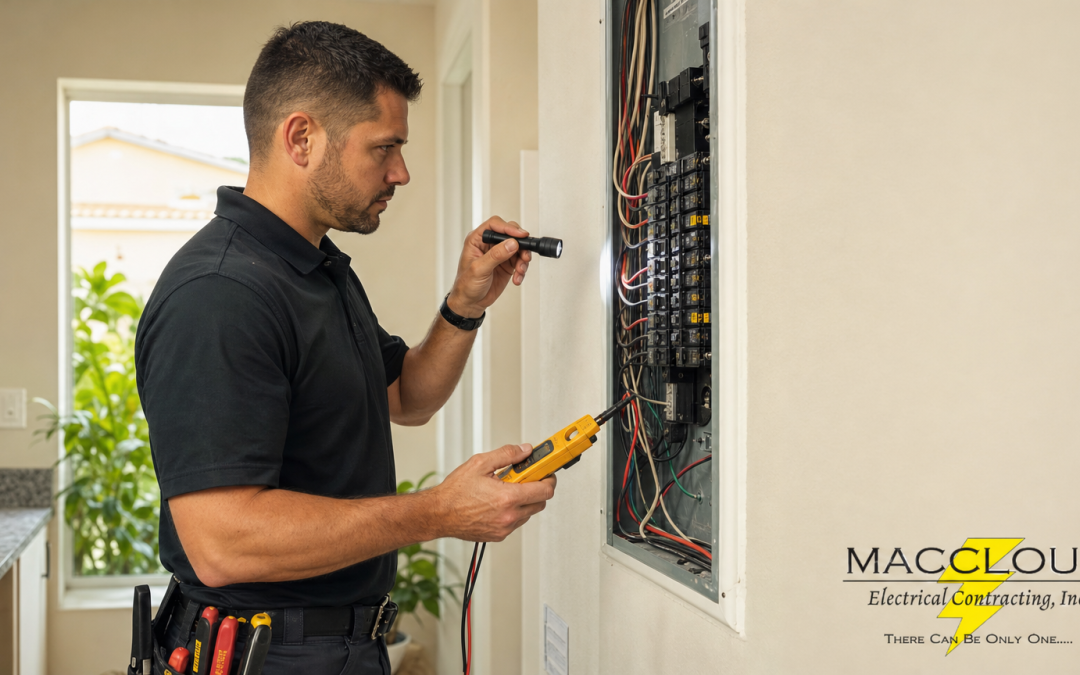
What Exactly Is the Violation?
Found out you have an electrical code violation? The first question isn't who to call — it's what, exactly, you're dealing with. A violation can mean a dozen different things: a panel that's overloaded or mislabeled, outlets too close to a sink without GFCI protection, aluminum wiring from an older build, a double-tapped breaker, or missing permits for work done years ago. Some of these are urgent. Others sit quietly until someone — a buyer's inspector, an insurance adjuster, a permitting office — flags them.
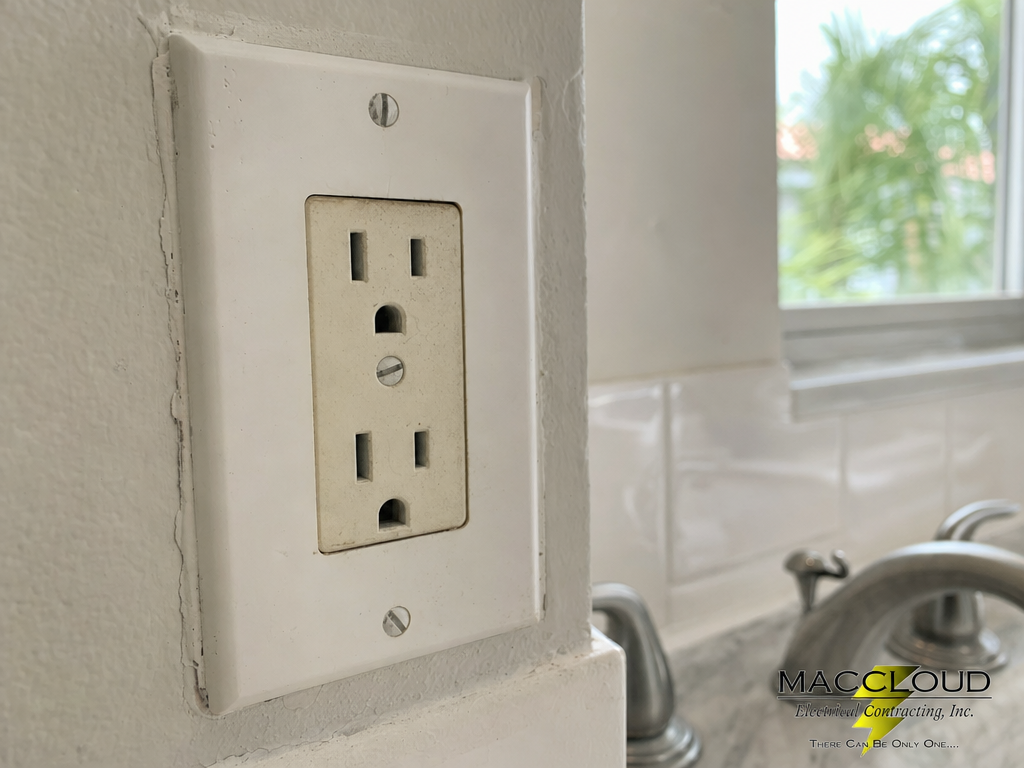
Take a double-tapped breaker as an example, since it's one of the more common findings on an older panel. It means two wires are landed under a single terminal that's only rated for one — and it can show up on a report as a flat, alarming line item. But a double tap on a 15-amp circuit feeding a hallway light is not the same situation as one on a 50-amp circuit feeding an air handler. The name of the violation tells you what it is, not how urgent it is or what it will take to fix. That distinction has to come from someone looking at the actual panel, not from the wording on a report.
We've written up a fuller list of the violations we see most often in Florida homes, which is worth a look if you're not sure what category yours falls into. Before anything else, get clear on which violation you actually have, because that answer shapes everything that follows.
Who Found It, and What Does That Mean for You?
Not every violation comes with the same kind of pressure behind it, and that depends partly on who found it. A home inspector working a real estate deal can flag a violation and note it in a report, but an inspector has no authority to require anything — what happens next is negotiated between buyer and seller. A local building or code enforcement office is different: if they've issued an actual citation, there's usually a process and sometimes a deadline attached, and ignoring it has consequences beyond a stalled sale. An insurance company doing a policy inspection sits somewhere in between — they can't cite you, but they can decline to renew or adjust a claim based on what they find.
Before you decide how fast to move, ask which of these situations you're actually in. A report that says 'violation noted' from a home inspector calls for a different response than an official notice from a code enforcement office. If you're not sure which kind of finding you have, ask whoever gave you the paperwork directly — the wording usually tells you, but it's worth confirming rather than assuming.
Is It a Safety Risk or a Paperwork Problem?
Not every violation is a fire risk, and not every fire risk shows up on a violation report. A scorched outlet, a breaker that trips repeatedly, or a panel that's warm to the touch needs attention now, regardless of what any inspection paperwork says. A missing permit record for work done a decade ago, on the other hand, is usually a paperwork issue — it matters for a sale or a refinance, but it isn't going to shock anyone tonight.
Ask whoever found the violation to tell you plainly which kind you're facing. If they can't answer that directly, ask again, or get a second opinion from someone qualified to look at the actual wiring or panel. This is the question that should decide your timeline, not your calendar — a paperwork problem can usually wait for a convenient appointment, but a live safety issue shouldn't wait for one.
Who's Qualified to Fix It — and Will It Need a Permit?
Ask your electrician what qualifications the proposed repair requires and whether the local building department requires a permit or inspection. Some minor fixes don't need a permit at all; panel work, new circuits, and anything touching service equipment generally does. Requirements depend on the specific work and the jurisdiction, so a general article — including this one — can't tell you exactly what applies to your address. Have the written scope identify who will pull the permit if one is needed and how completion will be documented, so you're not left guessing after the work is done.
It's also worth being clear on the difference between a handyman and a licensed electrician for this kind of work. A handyman might be fine for cosmetic fixes, but code violations involving wiring, panels, or circuits are electrical work by definition, and most jurisdictions require a licensed electrician to pull the permit regardless of who does the physical labor. If you are comparing options, our handyman vs. electrician guide explains the questions to ask before choosing someone for electrical work.
What Should the Estimate Spell Out?
Before you agree to any repair, ask for a written scope that names the exact violation being corrected, states whether a permit and inspection are included in the price, and explains what happens if the inspector finds something else once the panel or wiring is opened up. Vague verbal estimates leave too much room for scope creep on this kind of work.
A solid estimate for a violation repair should answer a few things in writing: what's being replaced or corrected, whether permit fees are included or billed separately, who schedules the inspection and when, and what the plan is if the inspector requires additional work beyond what was originally scoped. That last point matters more than it sounds — older panels in particular sometimes reveal a second issue once the cover comes off, and it's better to know upfront how that gets handled than to find out mid-job. A clear, itemized estimate protects you and gives you something real to compare if you're getting more than one quote.
What Happens If You Wait?
Ignoring a violation doesn't make it go away — it just moves the decision to a worse moment. If you're selling the house, an unresolved violation found during a buyer's inspection can stall or reopen negotiations right when you're trying to close. If it's tied to an insurance claim, an unresolved electrical issue can complicate the payout or affect renewal terms. And if it's an actual safety hazard, waiting just means living with the risk longer — a warm panel or a flickering circuit doesn't tend to fix itself.
There's also a quieter cost: a violation that sits unresolved for years can get harder to trace back to its original cause, especially if other work has been done around it since. None of this means you have to drop everything today, but it does mean 'later' should be a plan with a date attached to it, not an open-ended hope.
Is This a One-Off Fix, or Part of a Bigger Project?
Sometimes a violation turns up on its own, unconnected to anything else. Other times it surfaces in the middle of a renovation, or right before a busy season when scheduling gets tighter. If you're already planning electrical work — a panel upgrade, a kitchen remodel, an addition — it's worth asking whether the violation repair can be folded into that project instead of handled as a separate call-out. Combining the work can mean one permit process and one inspection instead of two.
We put together a seasonal planning list for Palm Beach County homeowners that's useful for thinking through timing. If your violation is a standalone issue, don't let the idea of 'someday' bundling it with other work become an excuse to put off a safety fix.
Questions and answers
Do I have to fix an electrical code violation before I sell my home?
Often, yes — lenders and buyers frequently require it, especially if a home inspection flags the issue. But requirements vary by lender, buyer, and situation, so it's worth confirming with whoever is involved in the sale rather than assuming.
Will my homeowners insurance cover a loss connected to a known code violation?
It depends on the insurer and the specific policy. A known, unaddressed violation can complicate a claim. If you're aware of one, it's worth checking with your insurance provider directly rather than guessing.
Can I fix a minor electrical code violation myself?
Avoid attempting an unfamiliar wiring, panel, or circuit repair yourself. Ask a qualified electrician to assess the issue and ask your local building department what requirements apply before work starts.
How long do I have to fix a violation if code enforcement cited my home?
Timelines vary by jurisdiction and by the nature of the violation, so the notice itself should state a deadline or next step. If it doesn't, or if you're unsure what it means, contact the office that issued it directly rather than guessing.
If you've found a violation and aren't sure what it means for your home, contact MacCloud Electric to talk through what you're looking at before you decide on a fix.