

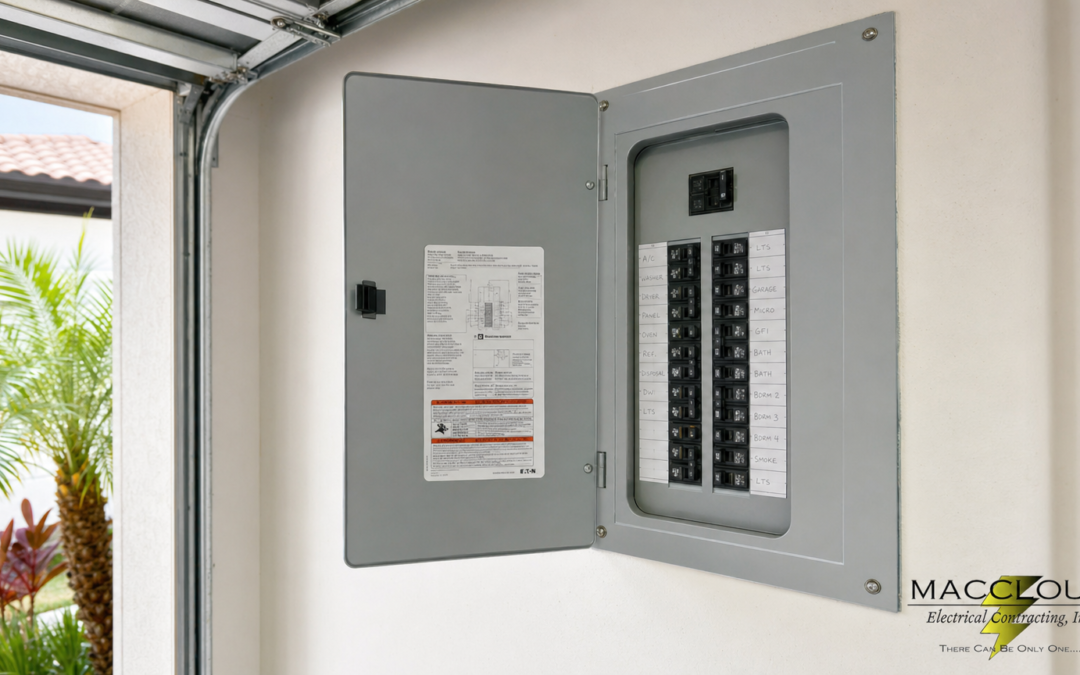
What Actually Determines Electrical Panel Cost
There's no single figure that answers "what should an electrical panel cost," because the honest answer depends on three things: the panel's amperage and type, whether the job is a straight swap or a full service upgrade, and how much of the existing wiring and grounding has to be brought up to current code before the new panel can be signed off.
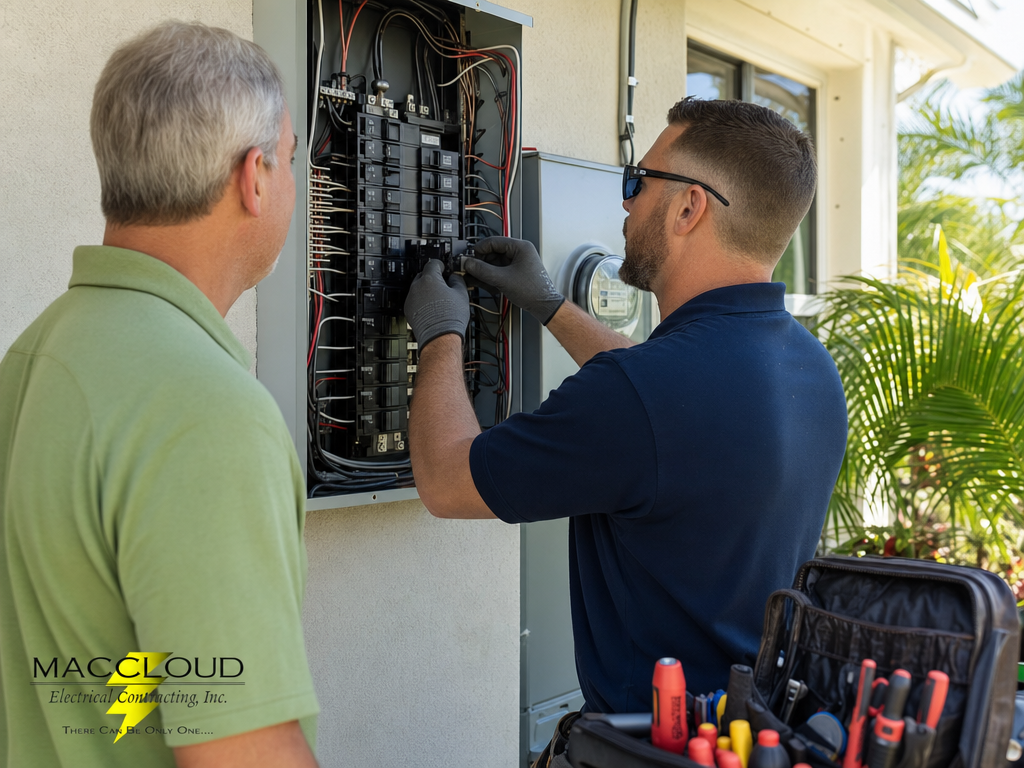
That last point is the one most homeowners don't see coming. A panel upgrade quote isn't just the price of the breaker box itself — it includes the labor to disconnect and reconnect every circuit, coordinate the temporary power shutdown with the utility, and correct anything in the existing system that won't pass inspection with a new panel installed. That invisible work is often what separates a lower quote from a higher one, even when both electricians are pricing the same size panel.
Amperage matters because it sets the ceiling on what your panel can safely handle. A 100-amp panel might be adequate for a smaller home with gas appliances and no major electric loads, while a 150- or 200-amp panel is more typical where central air conditioning, an electric range, and a pool pump are all drawing from the same service. Some larger homes or properties planning for an EV charger or a generator transfer switch look at 400-amp service instead. The jump from one amperage tier to the next isn't just a bigger box — it can mean larger service conductors, a different meter can, and sometimes coordination with the utility to upgrade the service drop itself.
The other distinction worth understanding before you get a quote is main panel versus sub-panel. A main panel upgrade replaces the central point where utility power enters the home and gets distributed to every circuit. A sub-panel addition, by contrast, extends capacity to a specific area — a detached garage, an addition, or a workshop — without touching the main service. These are priced differently because the scope of work is different: a sub-panel doesn't require a utility disconnect or a full rewire of existing circuits, so it's a narrower job even though it still involves permitting and inspection.
For a full breakdown of panel cost by amperage and scope, our Electrical Panel Upgrade Cost Palm Beach: Full 2026 Price Guide walks through those numbers in detail. This article covers the questions that usually come before that — what moves the price, whether the upgrade is worth doing, and how to read a quote.
When Code Compliance Adds to the Price
Older homes in Palm Beach County often need more than a panel swap. If the existing wiring, grounding, or circuit layout doesn't meet current code, an electrician has to correct those issues as part of the upgrade — not as an optional add-on, but because the new panel won't pass inspection otherwise. That's one of the most common reasons two quotes for "the same job" can land far apart: one electrician scoped the panel alone, the other scoped the panel plus the corrections it will be inspected against.
The kinds of issues that commonly surface during a panel upgrade include double-tapped breakers (two circuits sharing one breaker slot, which isn't rated for that load), missing or inadequate grounding and bonding, outdated fuse boxes still feeding part of the home, and wiring that's been modified over the years without a permit. None of these are necessarily emergencies on their own, but once a panel comes out and an inspector is involved, they become part of the scope whether the homeowner anticipated them or not.
Panel replacement in most Florida jurisdictions requires a permit and a final inspection, since the work changes the home's main service equipment — this is standard practice for this category of electrical work generally, not something specific to any one municipality. Factoring that step into your timeline and budget from the start avoids the surprise of an inspection holding up a project that otherwise looked finished.
If you're not sure whether your home has any outstanding electrical issues, our guide to common electrical code violations in Florida homes covers the kinds of problems inspectors flag most often in this region, including wear tied to humidity and coastal conditions.
Is Replacing Your Electrical Panel Worth It?
If your panel is undersized for your home's current load, showing signs of wear, or can't safely support the circuits you need, an upgrade is a safety investment rather than a cosmetic one. A panel that's working as designed doesn't need to be replaced just because it's old — but a panel that's tripping breakers under normal load, running hot, buzzing, or showing scorch marks around the breakers is a different situation, and one worth having looked at regardless of the panel's age.
Some older panel brands from decades past are widely discussed in the electrical trade as having known reliability issues with their breakers failing to trip when they should — this is general industry knowledge rather than a claim specific to any property, but it's a reasonable thing to ask about if your home still has its original panel from a much earlier build date. An electrician inspecting your panel can tell you whether the brand and condition in front of them is a factor worth acting on.
Capacity is the other half of the "worth it" question. A panel that technically handles your current usage with no margin to spare can become a limiting factor the moment you add a larger HVAC system, an electric vehicle charger, or a pool heater. In those cases, replacing the panel isn't about fixing something broken — it's about giving the home room to take on the load it's actually going to carry.
MacCloud Electric handles electrical panel services as well as corrections for electrical code violations, so if an inspection turns up both a panel issue and a code gap, those can be addressed as one job rather than two separate calls.
What Electricians Charge For, Beyond the Panel Itself
A panel installation quote generally reflects several separate cost components: the panel and breakers themselves, the labor hours to remove the old equipment and install the new one, coordination with the utility for the power disconnect and reconnect, and the final inspection. None of these are optional steps — they're the reason panel pricing varies more than a simple parts price would suggest.
To see how that adds up in practice, consider a straightforward residential upgrade. The panel and breakers are a fixed material cost. Labor covers safely de-energizing the home, removing the old panel, mounting and wiring the new one, and reconnecting every circuit correctly — which takes longer the more circuits a home has, regardless of panel size. Utility coordination means scheduling the temporary disconnect with the power company, since the electrician can't legally work on a live service feed; that scheduling can affect the timeline more than the price, but it's part of the job either way. The final inspection confirms the work meets code before the panel is considered complete and the power is fully restored to normal operation.
When you're comparing quotes, it's worth asking what's included in each one. A lower number that doesn't account for code corrections or utility coordination isn't necessarily a better deal — it may just be missing part of the job, and that gap tends to show up later as a change order once the work is already underway.
What Is the 80% Rule for Electrical Panels?
The 80% rule is a general electrical safety principle, not a client-specific policy: continuous electrical loads shouldn't exceed 80% of a circuit's or panel's rated capacity. It's one of the reasons an electrician sizing a new panel looks at your home's total expected load rather than just replacing like-for-like — a panel that's technically rated for your current usage may leave little room for anything added later, like a larger HVAC system or an EV charger.
In practical terms, a 200-amp panel built with the 80% rule in mind is expected to carry roughly 160 amps of continuous load comfortably, with the remaining margin reserved for short-term surges and future additions. That margin is why "just match the amperage I already have" isn't always the right instruction to give an electrician — if the existing panel was already running close to its limit, replacing it with an identical size just reproduces the same ceiling. A load calculation, which a licensed electrician performs as part of a proper panel sizing job, is what determines whether your home actually needs more headroom than it currently has.
Getting a Real Number for Your Property
Residential and commercial panel pricing aren't the same conversation. A single-family home upgrade is a different scope than a commercial space, where electrical demand, panel count, and code requirements are usually larger. If you're planning a commercial build-out in Palm Beach County, our guide to commercial electrical build-out costs covers that scope separately.
For residential upgrades, the most reliable way to get an accurate number is a site visit — a quote based on your actual panel, wiring condition, and load needs will always be more useful than a generic range. Before that visit, it helps to know a few basics about your current setup: the panel's amperage if it's printed on the panel door, roughly how many breakers it has, whether you've noticed any breakers tripping repeatedly, and whether you're planning any additions — an EV charger, a pool, a larger HVAC system — that would add load down the line. None of that replaces an in-person assessment, but it gives the electrician a head start on what to expect when they arrive.
Our Electrical Panel Upgrade Cost Palm Beach: Full 2026 Price Guide is the best starting point if you want to understand pricing by panel size before that visit.
Questions and answers
What is the average cost to replace an electrical panel?
It depends heavily on the panel's amperage, whether code corrections are needed, and the scope of the job — which is why a flat average isn't a reliable way to budget. Our full price guide breaks pricing down by panel size and scope rather than giving one number that may not fit your situation.
Is replacing an electrical panel worth it?
It's worth it when the current panel is undersized, worn, or unsafe for the load it's carrying. It's not something to do purely because a panel is old if it's still performing safely and has capacity for your current needs.
How much do electricians charge to install a panel?
A panel installation charge typically covers the panel and breakers, the labor to disconnect and reconnect every circuit, coordination with the utility for the power shutdown, and the final inspection — not just the box itself. That's why two quotes for the same amperage can differ: the gap is usually in what each electrician has scoped around the panel, not the panel's price alone.
If you want a real number for your home or building, contact MacCloud Electric for an on-site estimate, or start with the full Electrical Panel Upgrade Cost Palm Beach price guide to see pricing by panel size.